Why Clean-Product Apps Disagree About Laundry Detergent
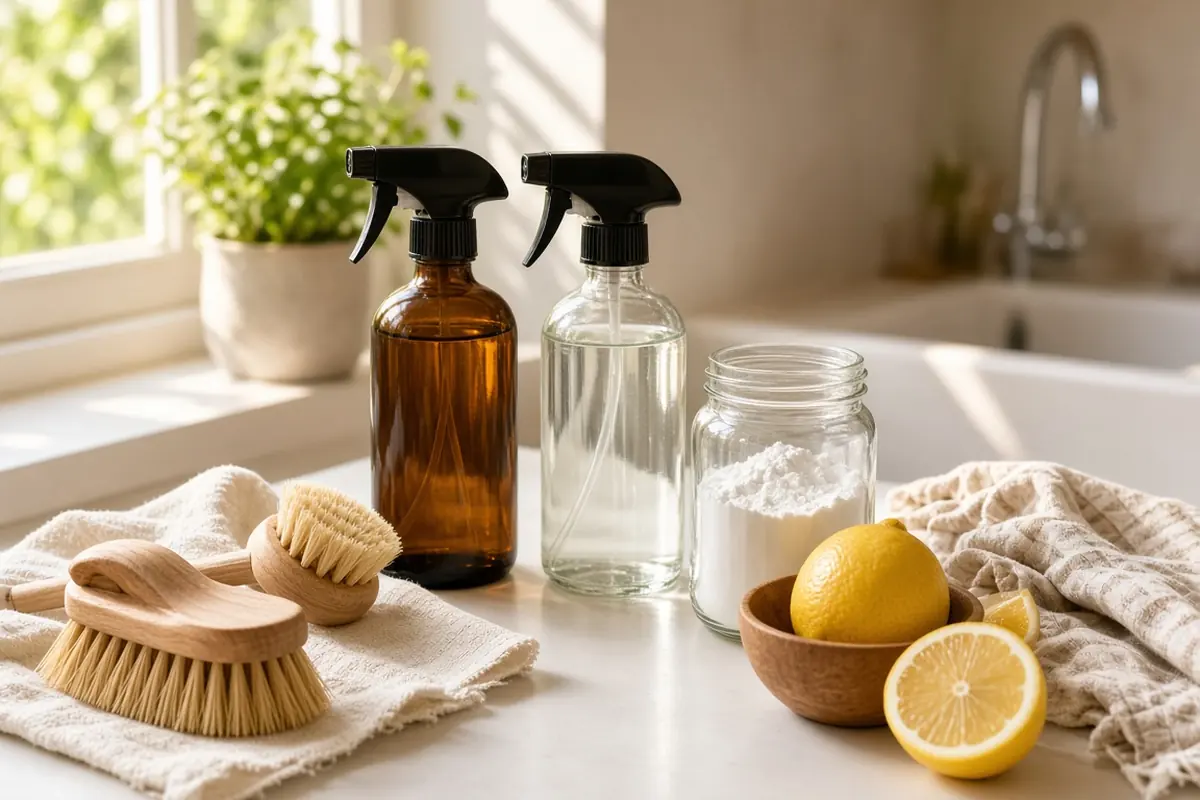
Scan a bottle of laundry detergent and you may get a letter grade in one app, a number in another and nothing at all in the third. Here's why, based on each app's published method, and how to read the label and decide for yourself.
We use scanner apps too, and laundry detergent is where they confuse us most. That's not because one app is broken. It's because the three popular apps cover cleaning products very differently, and the one that grades detergent uses its own system. Once you know the rules, a confusing result usually makes sense.
First: two of the three apps barely cover detergent
- Yuka says it does not currently analyze home cleaning or maintenance products (Yuka Help: household cleaning products).
- Think Dirty says it focuses on beauty and personal care and has only “a small selection of household items” (Think Dirty FAQ).
- EWG rates cleaners in a separate database, its Guide to Healthy Cleaning. Its app FAQ says cleaners are graded A to F, while personal care and sunscreen products use 1 to 10 scores (EWG apps FAQ).
What this means for detergent: a lot of “disagreement” is really one app with an answer and two without one. A missing score isn't a bad score. It just means the app doesn't cover that product.
Rule 1: EWG grades cleaners differently than Skin Deep
If you know EWG's 1–10 Skin Deep scores, don't assume a detergent grade works the same way. EWG's cleaners method (EWG: how cleaners are scored):
- Gives a letter grade, A to F, built from two parts: ingredient hazards and how fully the company discloses its ingredients.
- Counts how you're exposed. EWG weights hazards by route (for example, breathing in a spray versus touching a liquid) and by foreseeable misuse.
- Considers concentration for some hazards. EWG drops acute hazards that depend on concentration, like the irritation from a caustic ingredient, when there's too little of the ingredient to cause them. It never drops chronic hazards this way.
- Adjusts for pH, VOCs and regulatory status, so a very alkaline or high-VOC product can lose points beyond its ingredient list.
- Rates ingredient groups by their worst member. When a label lists a group (such as “enzymes”) instead of a specific ingredient, the group is scored by its highest-hazard member.
Think Dirty works differently. By default its rating is no lower than the product's worst single ingredient, with case-by-case exceptions, for example when moderate-concern ingredients make up under 5% of the formula (Think Dirty methodology). So for the few household products it does cover, one ingredient can set the rating no matter how little of it there is.
Rule 2: In EWG's cleaners guide, disclosure is part of the grade
This is the rule that surprises people most. EWG's cleaners grade rewards companies that list every ingredient (EWG: how cleaners are scored):
- Disclosure points come from the label, the company website and the safety data sheet.
- A non-specific term like “fragrance” counts as incomplete disclosure.
- If a product lists fewer than four ingredients, its disclosure score is cut in half.
- If the hazard part of the score is high (above 2 on EWG's scale), good disclosure can't improve the grade.
What this means for detergent: two detergents with similar formulas can get different grades because one company publishes a full ingredient list on its website and the other doesn't. And the word “fragrance” can hurt a product in EWG's cleaners guide, and in Think Dirty, where any product listing it is rated 7 or higher (Think Dirty methodology).
Rule 3: Enzymes are flagged mostly because of factory workers
- EWG lists the enzymes group as “some concern” for asthma and respiratory effects, based on studies of workers exposed in manufacturing (EWG: enzymes substance group).
- EWG's own label guide says there's no evidence that consumers who use cleaners with enzymes are at risk, and notes that enzyme products often include a stabilizer like boric acid, which is worth checking on the label (EWG: decoding cleaning labels).
What this means for detergent: an enzyme detergent can carry a flag that has more to do with handling powdered enzymes in a factory than with washing your clothes. If you'd rather skip enzymes anyway, look for “enzyme-free” and check the ingredient list for protease, amylase, lipase, mannanase or cellulase.
Rule 4: “Free & clear” and essential oils aren't the whole story
- EWG calls “free & clear” products a better bet, but notes that a few may still contain a masking scent (EWG: decoding cleaning labels).
- EWG also says essential oils aren't automatically safe, that optical brighteners can be irritating, and that words like “natural” and “non-toxic” aren't regulated (same source).
- Think Dirty's automatic 7-or-higher rating applies to products that list “fragrance” (Think Dirty methodology). Named essential oils are rated as their own ingredients.
What this means for detergent: “no synthetic fragrance” and “unscented” aren't the same thing. A cleaner scented with plant oils can be rated very differently from a truly unscented one, and the reason is in the ingredient list, not on the front of the bottle.
Your 5-minute referee routine for any detergent
- Read the label first. Look for “fragrance” or “parfum,” essential oils, enzymes (and any boric acid), optical brighteners, preservatives, and whether the full ingredient list is printed.
- Check which apps cover it. Expect no Yuka result for detergent and only patchy Think Dirty coverage. For EWG, search its cleaners guide.
- Find the driver. In EWG, check whether the grade is pulled down by an ingredient hazard or by missing disclosure (Rule 2).
- Name the rule. Is it route or concentration (Rule 1), disclosure or the word “fragrance” (Rule 2), enzymes (Rule 3), or scent from essential oils (Rule 4)?
- Decide what matters to you. If someone in the house has sensitive skin or asthma, scent and enzyme flags may matter more to you than a single letter.
Four laundry options to check yourself
These come from our cleaning guide. We chose them from their published ingredient lists, and each shows a different pattern you'll see in the apps. We're not quoting any app's rating. Look them up yourself and use the notes below to work out why the apps agree or disagree.
This guide contains affiliate links, including Amazon links, so we may earn a commission; see the disclosure.
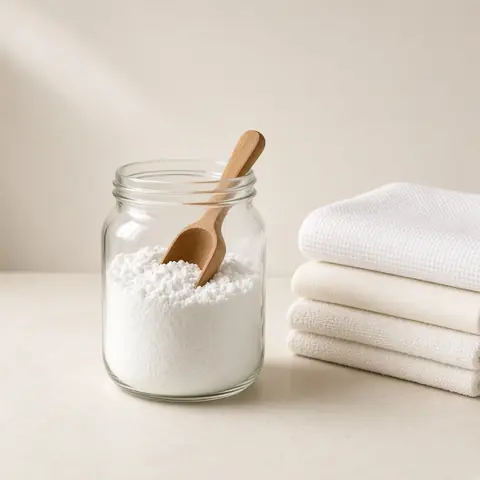
Illustrative photos, not the actual products. Tap a photo to see that pick on Amazon.
Molly's Suds Original Laundry Powder, Unscented, 120 Loads
Laundry powder with a short ingredient list and no added scent, from the same brand as our dishwasher powder pick.
Check price on Amazon →
Illustrative photos, not the actual products. Tap a photo to see that pick on Amazon.
Seventh Generation Free & Clear Laundry Detergent
A widely available fragrance-free and dye-free liquid detergent made for sensitive skin.
Check price on Amazon →
Illustrative photos, not the actual products. Tap a photo to see that pick on Amazon.
ATTITUDE Free & Clear Liquid Laundry Detergent
An unscented, dye-free liquid detergent that works for both HE and standard washers.
Check price on Amazon →
Illustrative photos, not the actual products. Tap a photo to see that pick on Amazon.
Dr. Bronner's Sal Suds Biodegradable Cleaner, 16 oz, 2-Pack
A concentrated all-purpose cleaner with a short, published ingredient list.
Check price on Amazon →Why we picked these
- Molly's Suds Original Laundry Powder, Unscented, 120 Loads Unscented laundry powder Laundry powder with a short ingredient list and no added scent, from the same brand as our dishwasher powder pick.
- Seventh Generation Free & Clear Laundry Detergent Easy fragrance-free detergent A widely available fragrance-free and dye-free liquid detergent made for sensitive skin. It's easy to find in stores too.
- ATTITUDE Free & Clear Liquid Laundry Detergent Unscented, enzyme-free detergent An unscented, dye-free liquid detergent that works for both HE and standard washers.
- Dr. Bronner's Sal Suds Biodegradable Cleaner, 16 oz, 2-Pack All-purpose concentrate A concentrated all-purpose cleaner with a short, published ingredient list. A small amount in a spray bottle of water handles counters, floors and more. Worth knowing: It's a concentrate, so dilute as directed on the label and keep it stored up high.
What to look at for each one
- Molly's Suds Original Laundry Powder, Unscented. Ingredients (mollyssuds.com product page, checked Nov. 3, 2026): sodium carbonate, sodium bicarbonate, magnesium sulfate (heptahydrate), unrefined sea salt. That's exactly four ingredients, right at the line where EWG's cleaners method stops halving the disclosure score (Rule 2). There's no fragrance and no enzymes; the brand sells a separate enzyme version (Super Powder, mollyssuds.com). The brand's scented versions add essential oils or natural fragrance, so check that the bag you buy says unscented (Rule 4). Washing soda (sodium carbonate) is alkaline, so this is a good one for seeing how EWG's pH adjustment and concentration rule play out (Rule 1).
- Seventh Generation Free & Clear. Ingredients (Amazon listing, checked Nov. 3, 2026): water, laureth-6, sodium lauryl sulfate, sodium citrate, sodium oleate, sodium chloride, citric acid, protease, amylase and mannanase enzyme blends, benzisothiazolinone, methylisothiazolinone. No fragrance listed. This is the enzyme example for Rule 3. It also lists two isothiazolinone preservatives near the end, so check how each app rates those. The listing shows EPA Safer Choice certification.
- ATTITUDE Free & Clear, Unscented. Ingredients (Amazon listing, checked Nov. 3, 2026): sodium coco-sulfate, lauryl, myristyl and caprylyl glucosides, water, sodium chloride, citric acid, sodium benzoate, sodium gluconate, potassium sorbate, glycerin, tea leaf extract. Enzyme-free and unscented. Compare it with Seventh Generation to see how much the enzyme flag and the preservative choice move each rating.
- Dr. Bronner's Sal Suds. Ingredients (drbronner.com product page, checked Nov. 3, 2026): water, sodium lauryl sulfate, lauryl glucoside, sodium coco sulfate, sodium benzoate, Siberian fir needle oil, white spruce oil, black spruce leaf oil, citric acid, sodium chloride, limonene. It has no synthetic fragrance, but it is scented with essential oils, and limonene is listed. That's the Rule 4 example. It's an all-purpose cleaner that many people also use for laundry, so an app may list it as a general cleaner rather than a laundry detergent.
What the apps don't tell you
- How well it cleans. Grades and scores screen for hazards and disclosure. They don't measure stain removal, residue or how it does in hard water.
- Your household. Sensitive skin, asthma or a baby's laundry may make some flags matter more to you than others.
- Reformulations. Databases lag behind label changes. Always read the bottle you're actually buying.
If you have little ones, our sister site has the same kind of breakdown for baby products: why clean-product apps disagree about baby wash.
Sources
All pages read Nov. 3, 2026. Methods change, so we re-check them periodically. We're not affiliated with EWG, Yuka or Think Dirty, and app names are used only to describe their published methods.
- EWG: Healthy Living app FAQ (cleaners graded A–F)
- EWG Guide to Healthy Cleaning: how cleaners are scored
- EWG Guide to Healthy Cleaning: enzymes substance group
- EWG Guide to Healthy Cleaning: decoding labels
- Yuka Help: household cleaning products
- Think Dirty: our methodology
- Think Dirty: FAQs
FAQ
Which app should I trust for laundry detergent?
For detergent, EWG's cleaners guide is the only one of the three with a published method built for cleaning products, and it grades them A to F. Yuka says it doesn't analyze household cleaning products, and Think Dirty covers only a small selection of household items. Use whichever app you like as a pointer, then read the ingredient list yourself.
Is EWG's cleaner grade the same as a Skin Deep score?
No. Skin Deep rates personal care products from 1 to 10. EWG's cleaners guide is a separate system that grades cleaning products from A to F and counts how fully a company discloses its ingredients, as well as the hazards.
Are enzymes in laundry detergent a problem?
EWG lists enzymes as a concern for asthma and breathing, based mostly on studies of factory workers. Its own label guide says there's no evidence that consumers who use cleaners with enzymes are at risk. Enzyme-free detergents exist if you'd rather skip them, and our cleaning guide has one.
Is "free & clear" the same as fragrance-free?
Usually it means no added fragrance or dyes, and EWG calls it a better bet. But EWG also notes a few such products may contain a masking scent. Read the ingredient list and look for "fragrance," "parfum" or essential oils.
Why don't you show the app scores or grades?
The apps' terms don't allow their ratings to be republished commercially, and a rating copied today can change tomorrow. Scanning or searching the product yourself takes seconds and gives you the current result plus the ingredient breakdown.